Have you struggled with the way you and your horse connect through contact? Does your horse show a brace or restriction when you ask for movement through the halter or bridle, or even if you just touch them? One beautiful solution is to explore the Balance Through Movement Method™ (BTMM) offered by Celeste Lazaris.
What is The Balance Through Movement Method?
The method can be used for development, rehabilitation, or to gain a deeper relationship with your horse.
This method was developed by Ms. Lazaris as she worked with thousands of horses through her bodywork business. She designed a three-pillar system that incorporates exercises you can do with your horse on the ground (and later under saddle) to:
- Help relax bracing muscles.
- Reprogram fascial holdings causing potential nerve compression.
- Develop a positive relationship to connection.
- Engage the muscles needed to create a healthy posture necessary for ridden work.
I discovered this method when I was working through some physical issues that my daughter’s mare was struggling with. It was a game changer for helping us reset her body and our relationship with her. But when we combined BTMM with Lazaris Nerve Release Technique™ (LNRT) sessions, we saw even more improvement in muscle development, better movement, and less anxiety. I was so impressed with the results that I went through the certification process to become a practitioner.
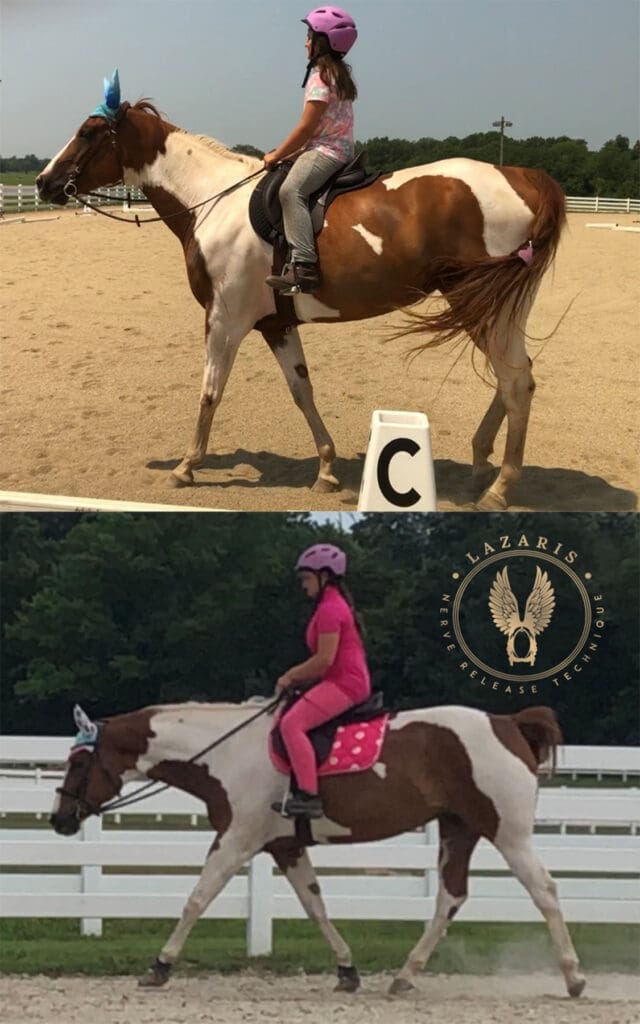
What has been so helpful for many of my clients is that I can support them as they start the BTMM process with their horses. The BTMM information and masterclass provide the framework for the method, but many people find that having in-person instruction to go over the foundation of the method can improve their results and provide valuable feedback. As part of my Lazaris Nerve Release Technique sessions, I can give clients feedback on their Pillar 1 work and help them fine-tune their understanding of the best posture for their horse and their relationship to contact.
What Is The Lazaris Nerve Release Technique?
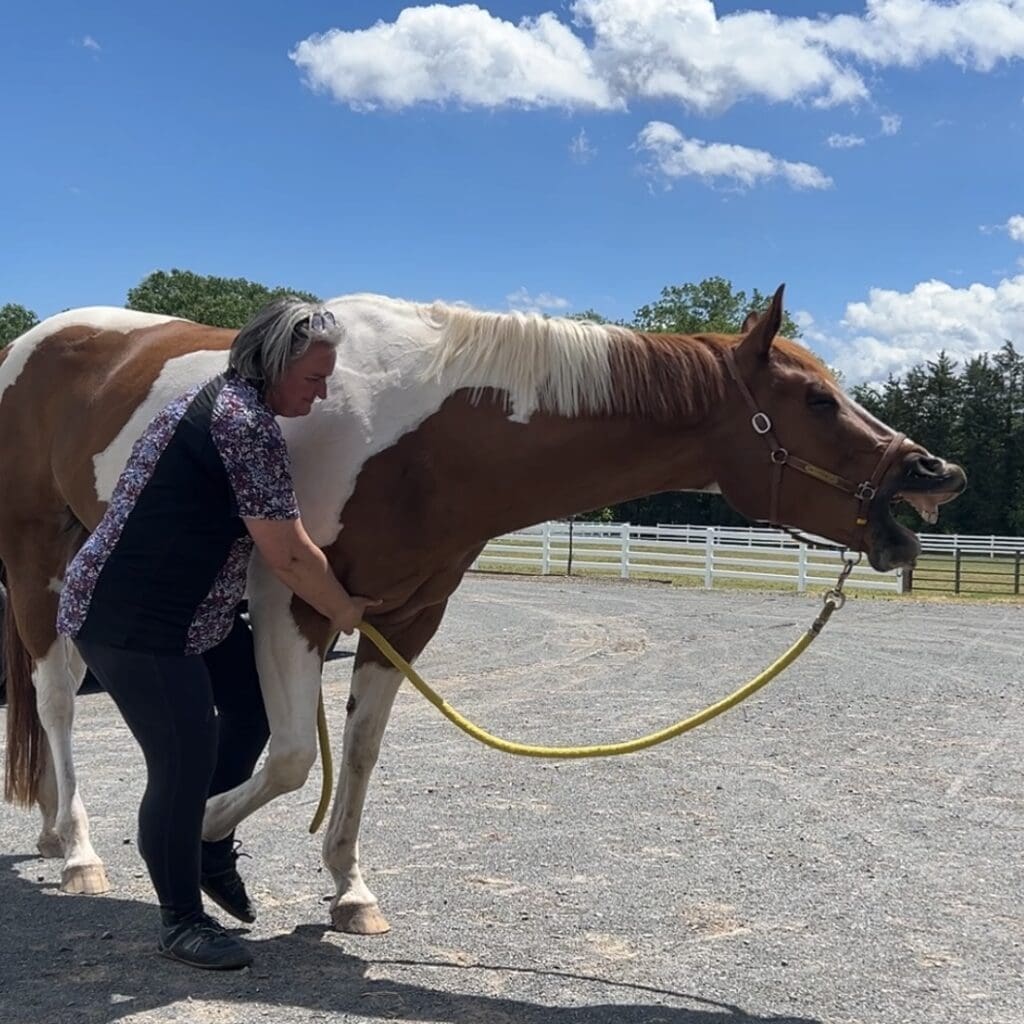
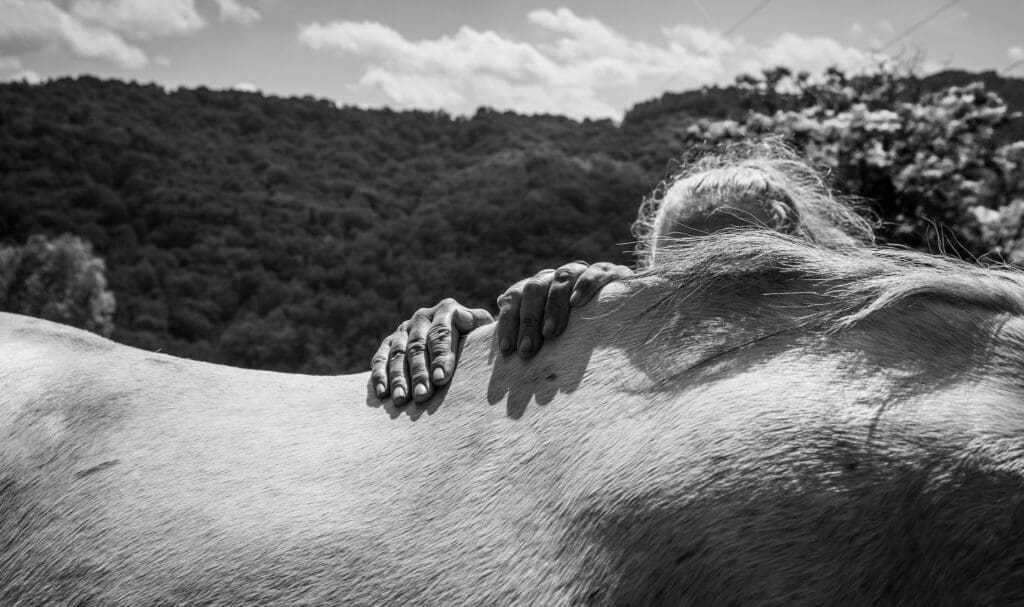
The LNRT utilizes gentle touches and movements to address fascial restriction. These touches and movements can help the horse’s body expand to allow more room for nerves, blood vessels, and lymphatic drainage. What many people do not realize is that equine bodies are incredibly sensitive and capable of understanding the most subtle of techniques. It is not necessary to engage in deep tissue massage, extensive stretching, or significant manipulation of the skeletal system, joints, or limbs in order to give the body the ability to heal itself. Using subtle techniques can be a game-changer for horses who have had to learn to tune out human interactions that are too “loud” for their sensitive systems.
So many horses have learned to instinctively brace against any contact, even light contact. That continual bracing can lead to communication issues and restriction in the body over time. Practicing the BTTM can help equestrians see when the relationship to contact can be improved as well as provide tools for improving that relationship. Combining BTMM postural improvements with a reduction in restriction in the body through the LNRT can provide profound emotional and physical benefits for horses and for their humans.
What Results Do I See?
I have seen a huge range of results from the LNRT. The following is a list of the most common:
- Eliminating cross-cantering
- More fluid movement under saddle
- Less anxiety
- Muscle development in the neck and shoulders
- Improved breathing and circulation
- More stability in the body
- Release of nerve impingements
- Improved comfort in horses diagnosed with kissing spine and other chronic medical issues
- Reduced lameness issues
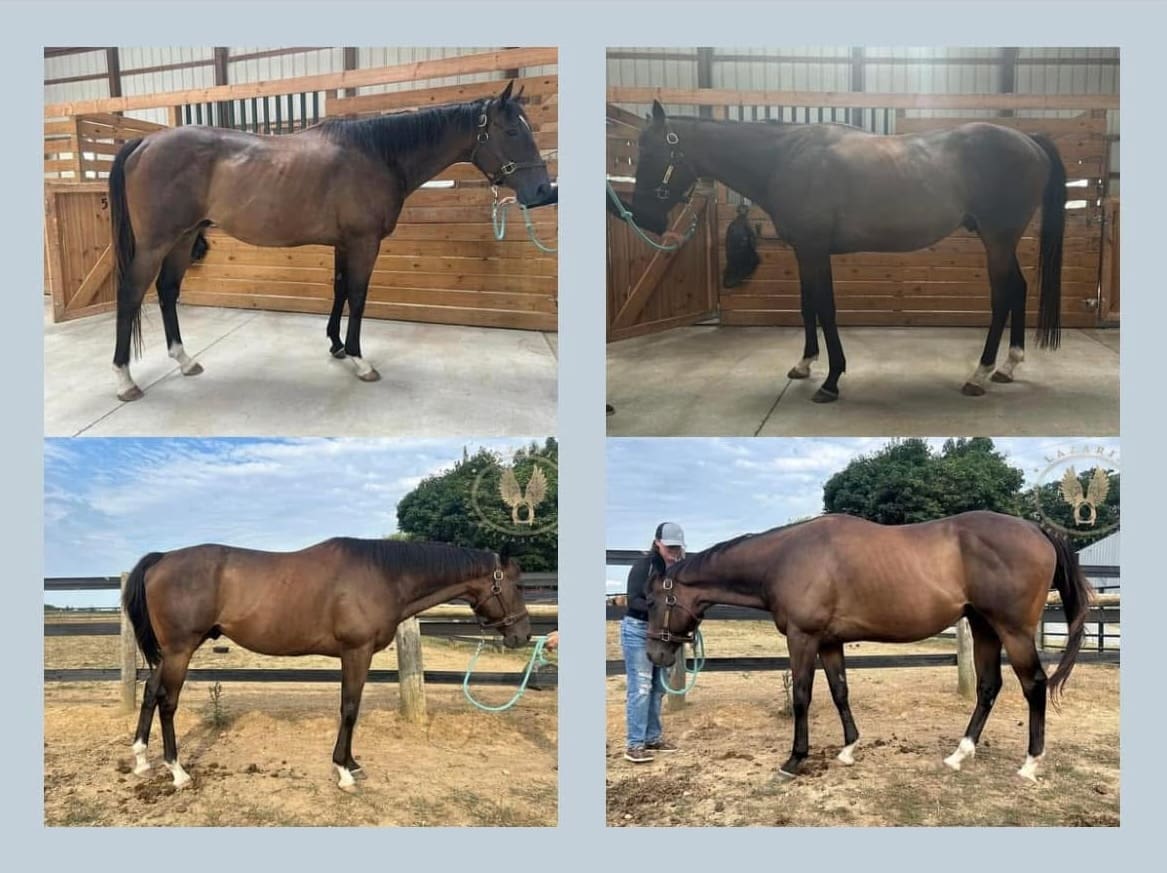
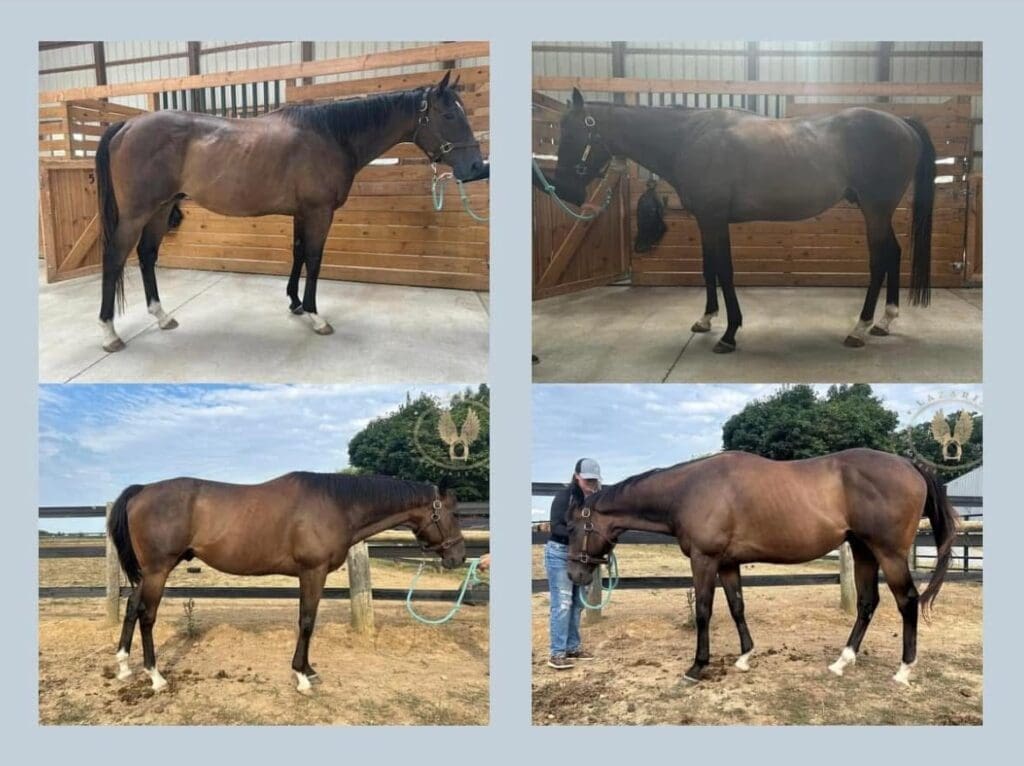
Below is an example of how a single LNRT session can impact a horse. This horse started the session nervous and struggling to stand still. Because the LNRT requires that horses be in a receiving energy, I worked with his caregiver to find a place where he could feel more comfortable, which was in his field with a friend. Once he was in a more comfortable space, I was able to work with him to relieve chronic tension. He was able to go on to compete successfully in barrel racing. And I was able to provide some coaching to his caregiver, who works with many horses, so she could refine her use of Pillar 1.
What Does A Typical Session Look Like?
A typical session lasts between 60 and 90 minutes and includes:
- A postural and movement assessment
- Physical palpation of the horse’s muscle tone
- Working with the horse in Pillar 1 posture
- A discussion and practice session with contact
- A series of gentle techniques to help the horse begin reprogramming their fascial restrictions and releasing any potential nerve impingements.
- A written session report summarizing the techniques used and recommendations for the future.
Why Do I Love the Lazaris Nerve Release Technique?
The LNRT offers so much for horses and their humans.
The horse must be able to receive the techniques. We are shifting to a culture where the horse’s needs and state of mind are increasingly important as part of our care strategy. The LNRT fits into this shift beautifully. The horse’s state of mind and willingness to receive the work are critical. Some sessions may focus more on helping the horse develop a receptivity for the work, if they struggle with anxiety or are uncertain. Other horses are ready for deeper work and can handle a full-body session.
The LRNT was developed specifically to work with the BTMM. If you are already part of the BTMM community, adding the LNRT to your horse care can help jump start your improvement or add nuance to the improvement you have already seen. It has been specifically developed to support horses learning the BTMM.
It supports horses of any discipline. The LNRT can be used with horses who are engaged in any discipline. My clients’ horses are engaged in dressage, jumping, barrel racing, and trail riding.
Any level of performance can be improved. All horses can benefit from LNRT sessions! I work with horses who are retired, who do groundwork exclusively, who are engaged in light riding, and who are considered higher-level performance horses. One of my clients’ horses even came out of retirement after a single LNRT session!
How Much Time Between Sessions?
Each horse and human pair progresses at their own rate through the BTMM, but I find that adding regular LNRT sessions (every 4-8 weeks) can both jump start the progress initially and help keep the momentum. At some point, the session frequency can be reduced to an as needed basis or once or twice a year as a check-in.
Would You Like to Learn More?
If you are interested in learning more about the BTMM or LNRT or would like to book a session, you can contact me.
You can also take a deeper dive by visiting: Equine Rehabilitation | Balance Through Movement Method.
And you can join the Masterclass here: Academy | Balance Through Movement Method.
You can read about my case studies using this modality at the links below:
June 20, 2025