I love sharing the results of my work. This is one of my first case studies using the Lazaris Nerve Release Technique™. You can learn more about these sessions by reading this post.
Background
Horse “A” is a 27-year-old Quarter Horse/Thoroughbred cross. She is currently retired, although her owner did light trail riding with her prior to her retirement. She was a barrel racer earlier in her life. This is her first Lazaris Nerve Release Technique session, although she has had other bodywork sessions in the past, including chiropractic work and massage. The purpose of the session is for me to practice my technique. Her owner reports that the horse typically enjoys bodywork and that she has no specific concerns for me to address.
The Session
One of the first things that practitioners of the Lazaris Nerve Release Technique do is assess the horse’s relationship with connection via contact. When possible, we ask the horse to soften to light pressure on the halter and come as close to Pillar 1 posture as they are able to. (You can learn more about Pillar 1 posture through the Balance Through Movement Method™.) Horse “A” was responsive to my request to move into posture close to the ideal Pillar 1 posture while standing and walk with that posture. This posture can be helpful for many of the techniques used during the session, although it isn’t necessary for the horse to maintain it.
I was able to complete a full body session with Horse “A.” She remained cooperative throughout the session, although she did express some sensitivity during many of the techniques. I addressed her sensitivity in different ways, including asking for less range of motion if the technique involved movement, asking a second time to check to make sure my request was understood, asking a different way, or moving to the next technique without fully completing the technique that caused the horse concern.
We also took several breaks to walk so the horse could integrate what she was feeling in her body as well as one break to eat. The horse has a medical condition that means she cannot eat large amounts of food in a short period of time, so her intake is reduced to smaller amounts throughout the day. It is always my goal to assist the horse with being as comfortable as possible during the session.
The Results
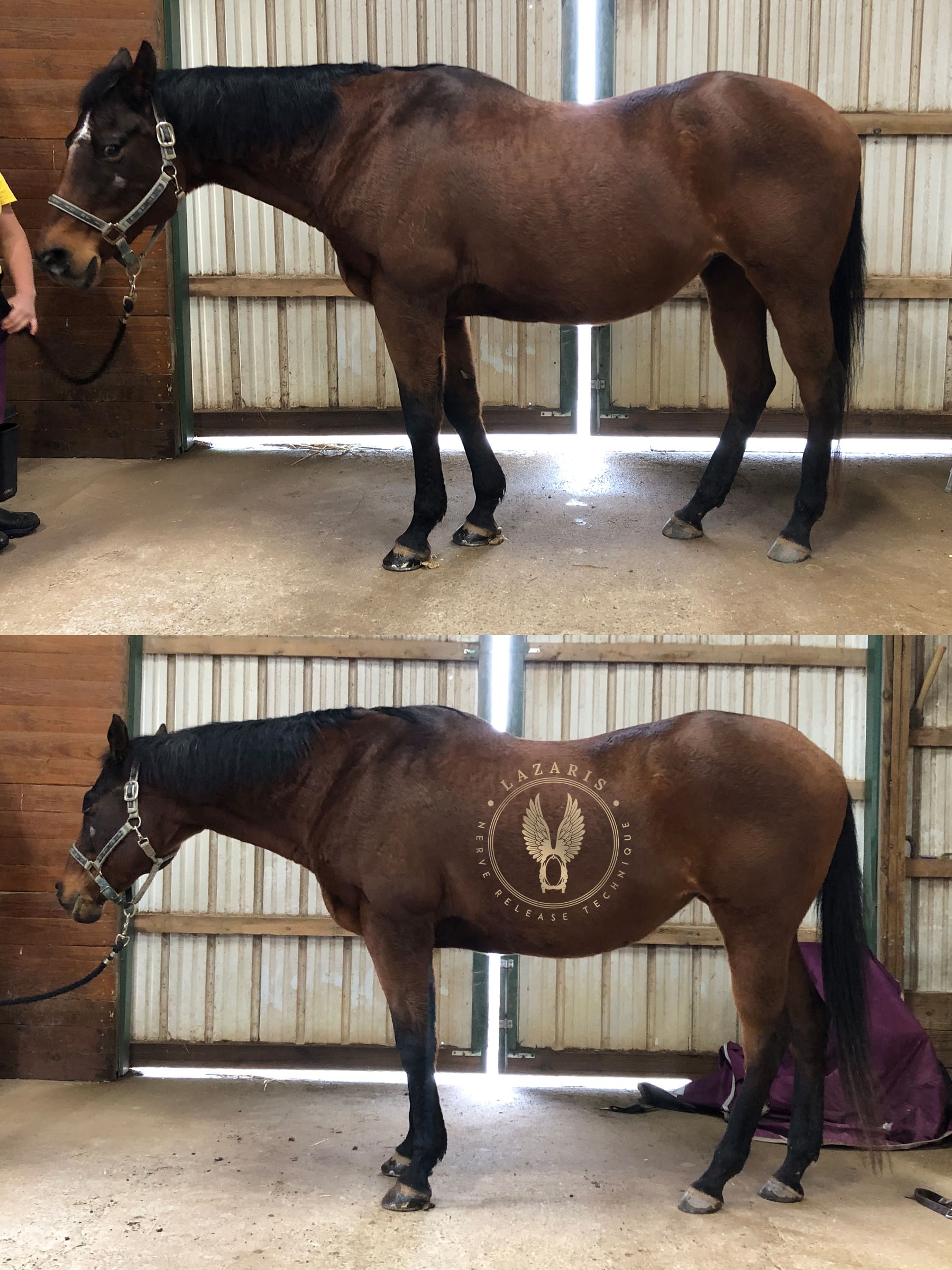
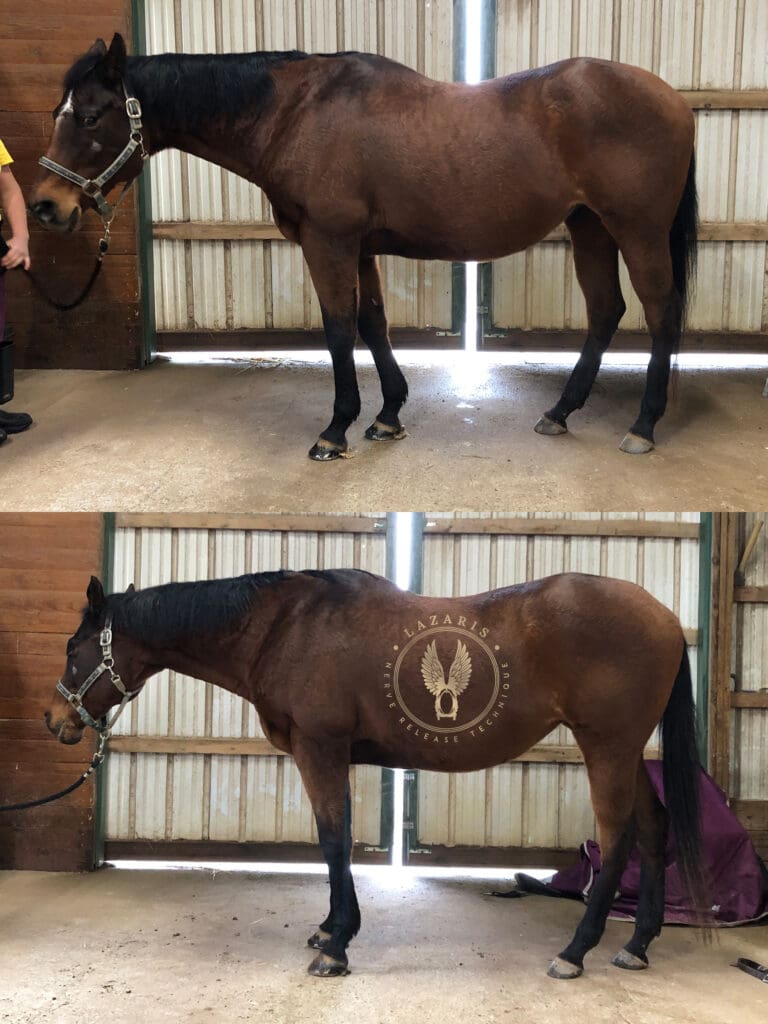
I’m sharing a Before and After comparison below. You’ll note that there is not a dramatic change in her posture. However, the most important result in this case is not a posture change. Instead, it is how the horse felt afterward. Her owner reported that in the following couple of weeks, she noticed a significant improvement in how the horse was moving.
The improvement was so significant that she decided to try light riding again.
Even more importantly, the horse and her human continue to enjoy regular short trail rides.
While the results of this case study are not necessarily typical, they are not uncommon. I often see improvement after one session. Of course, each horse is different, but I have seen many horses move more fluidly and appear to be more comfortable in their lives because of the Lazaris Nerve Release Technique.
If you are interested in learning more about this modality or you would like to book a session, please contact me.
July 8, 2025